Classics on Stage: Book Now!
The Cambridge Student Newspaper Theatre Editor and Classics MPhil Student, Alex Sorgo, gives us her insights on the next few months’ theatrical highlights for Classics Enthusiasts.

The Cambridge Student Newspaper Theatre Editor and Classics MPhil Student, Alex Sorgo, gives us her insights on the next few months’ theatrical highlights for Classics Enthusiasts.

Been working hard all week? Fear not, your square-eyed reporter is here to fill you in on this week’s Classics related TV and Radio highlights. (Click on the headings or images to go straight to the relevant website) If I’ve missed anything – comment below. 1. Ancient World Shorts A series of short videos on …

Have you ever wondered if truly all the Greek hoplites were as fearless in the face of battle as all those movies make us believe? Or if Achilles really never for one moment felt remorse over all the blood he spilt, fighting against the Trojans? In recent years, a lot of new research on violence …

Ovid’s Heroides represent and reveal sides of stories we are not usually given in classical myth- the stories of the women left behind while men wander the world accomplishing heroic deeds. This collection also leaves no chance for response- the letters are themselves just one side of a dialogue, giving us a male poet’s construction of women …

If a Roman poet were to write a Fasti on the notable dates of the modern Western calendar, April Fools’ Day on April 1st would surely deserve a mention. As with many ancient festivals, this day – although not a public holiday – witnesses the disruption of social and cultural norms, as friends and media …
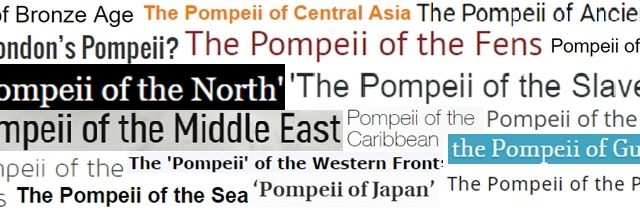
For years Pompeii has been many things. The subject of art and novels, the setting of films, a Lego model and a cake. So potent is the imagery the Roman city inspires in people’s minds that it has let many other places borrow the name. It seems like you cannot open a news or travel …

Classicists visiting Rome are faced with a barrage of different guides, maps and plans of the city and its classical sites (Amanda Claridge’s Rome: An Oxford Archaeological Guide comes particularly recommended). Whilst wandering the city I have, however, come to realise that what many of these guides lack is advice on how to combine your …

Another academic year begins, and with it comes a new cohort of first year PhDs. The start of a doctorate can be both exciting and disorientating, so I thought I’d offer a few tips that I wish I’d read when I started out on my own PhD ‘journey’. Everybody’s PhD experience is different, and there …
We would like to direct any visitors to the site of our new blog, Topica! https://classicstopica.wixsite.com/topica Continue reading
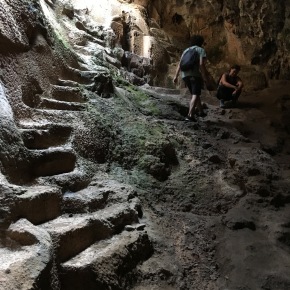
Mount Hymettus is known to the local people of Attica as the ‘Mad Mountain’, η Τρελοβούνι. Situated on the western side of the Attica peninsula and stretching above the coastal towns of Elliniko, Glyfada, and Voula, this mountain and its undulating topography are eclectic — if not ‘mad’. The granular limestone of the mountain makes … Continue reading
World Cup fever is sweeping the country, as the men’s England football team are set to compete in what will be their first World Cup Semi-final in most of this graduate body’s lifetime (but let’s not forget that the women’s team did the same as recently as 2015!). To mark the occasion, the Cambridge Classics … Continue reading

Cast your mind back a few weeks — when the weather was still cool and the cicadas were still quiet. In mid-June, I took my last exploratory trip around the Aegean islands (if you’re late to the party, catch up here: part 1, part 2, part 3, part 4). This voyage of discovery (also, an … Continue reading
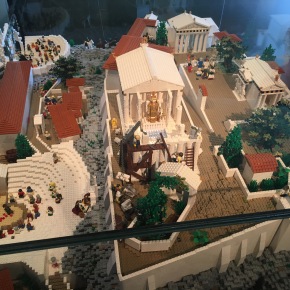
If you find time to visit only one of Athens’ many museum collections, make it the Acropolis museum. Right in the centre of the historic city, this award-winning museum houses over 4,000 objects from the Acropolis — the fortified hill in Athens, most famous for its fifth century B.C. marble temples. The Parthenon, in particular, … Continue reading
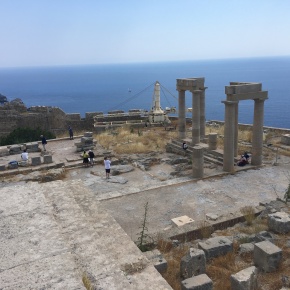
The next stage of my itinerant fieldwork round the Aegean islands sees me working my way further alongside the coast of Turkey (parts one, two, and three here). In fact, I was a mere mile from Turkey at one stage — and Didim was perfectly clear on the horizon, where I’ve happily spent the past few … Continue reading

The next stage of my research on the islands of Greece (parts one and two here) brings me to the coast of Turkey. I’m moving down a set of islands that are so close to the Turkish mainland that I’ve been able to see across to Ayvalık and Çeşme — and I can almost taste … Continue reading

Continuing on from last time, here’s the next thrilling instalment of my Greek Island hopping fieldwork adventure. Having been left abandoned on the shores of Mykonos in the last episode, I was soon back on the road (/the sea). Next stop: more of the Northern Cyclades. Andros Andros is the northern-most of the Cycladic islands, … Continue reading
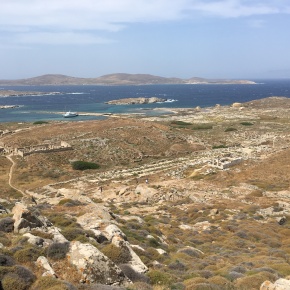
For the next few months —and thanks to the generosity of my funding body— I’m on a Greek Odyssey. As part of my PhD fieldwork, I’m visiting the archaeological sites and museum collections from some of the Cyclades, Dodecanese, and Northern Aegean islands. These groups of islands comprise some of 6000 islands in the middle … Continue reading

“How did you get from Classics to policy?!” – a question often posed to me, often incredulously, during my internship at the Cambridge Centre for Science and Policy (CSaP) funded by the Arts and Humanities Research Council (AHRC). And yet, far from being irrelevant to the “real” world, the ancient world cropped up again … Continue reading
 res gerendae